

The Majestic Theatre is not just a surviving architectural landmark; it is a portal to a time when going to the theater was a sacred ritual. Behind its majestic facade on Elm Street lies a history of incredible ambition, bitter decline, and mystical riddles that defy logic. In a world dominated by digital technology, this hall remains a place where the acoustics remember the voices of legends, and the presence of its first master is still felt in the empty corridors.
On dallaski.com, we tell the story of how the architectural genius of John Eberson created a space where the line between reality and theatrical magic has been blurred for over a century.
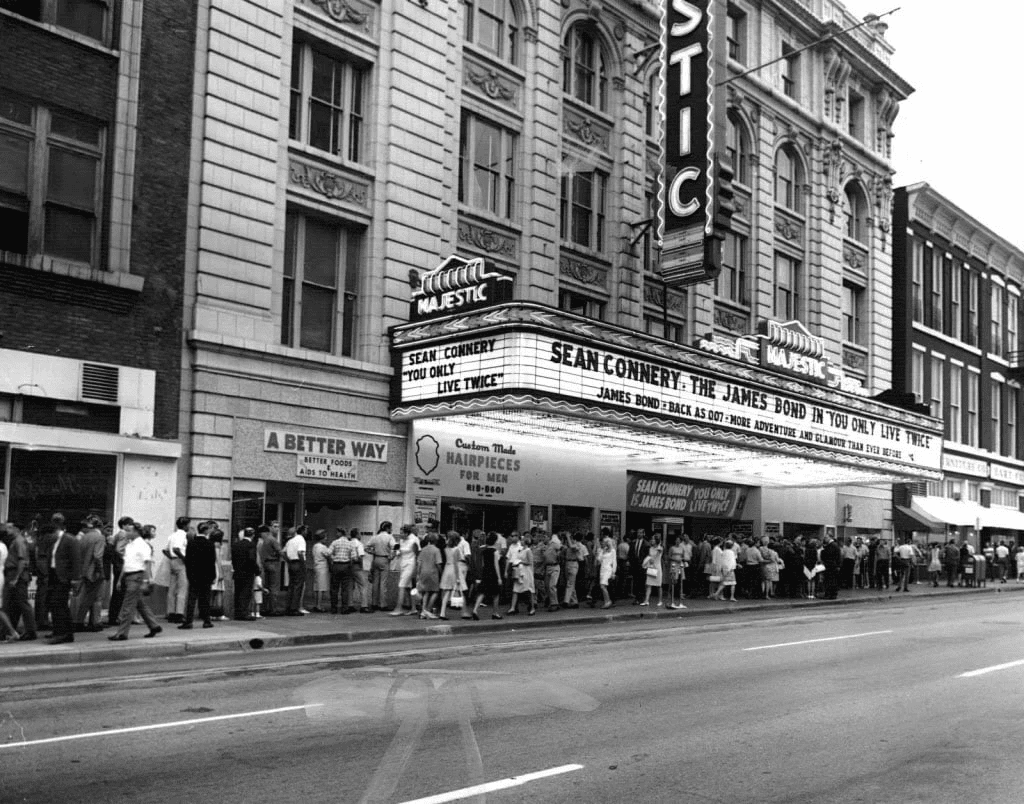
Karl Hoblitzelle’s Palace on Elm Street
When architect John Eberson presented the project in 1921, Dallas waited in anticipation. The client, Karl Hoblitzelle, sought to create not just an ordinary movie theater, but a true “temple of the arts”. The cost of construction at that time exceeded two million dollars, an astronomical sum for Texas in that era.
The majestic Neo-Renaissance facade concealed incredible luxury in its interior decoration, which amazed visitors from their very first step.
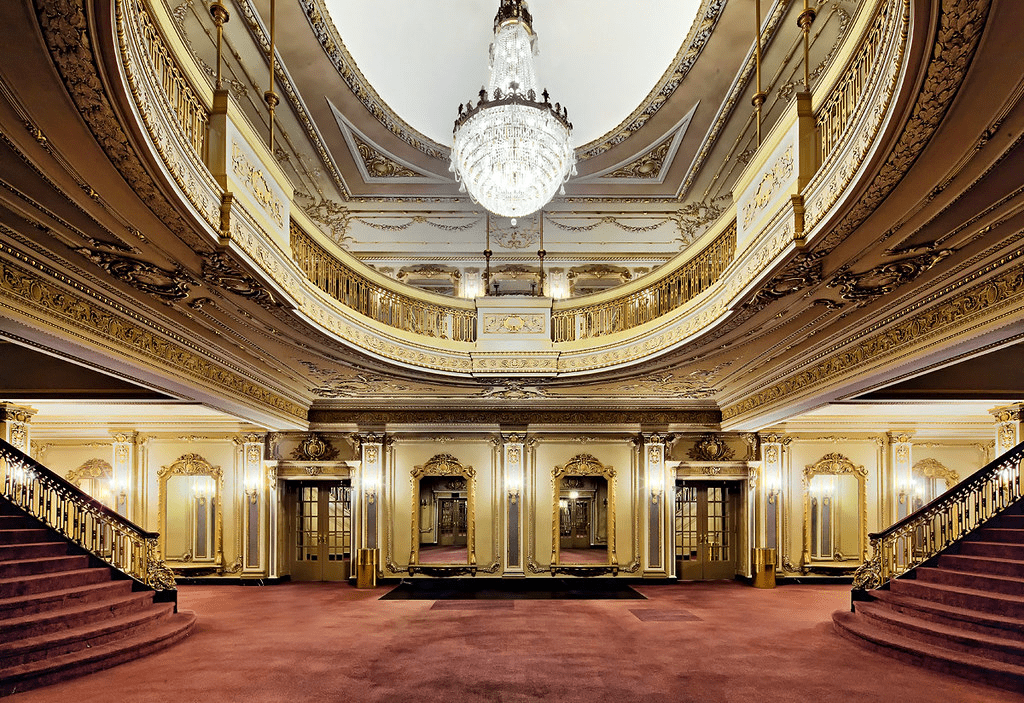
- Marble columns. These created an atmosphere of ancient grandeur and unshakable stability within the interior.
- Crystal chandeliers. They filled the space with thousands of bright reflections, emphasizing the high status of the establishment.
- “Heavenly Azure” ceiling. A special artistic painting created the illusion of an open, endless sky right above the audience’s heads.
John Eberson used his signature style to transform an enclosed space into one that breathes with freedom and aesthetics. Every detail, from the heavy velvet curtains to the exquisite carvings on the railings, worked to create the atmosphere of a fairytale palace where every viewer could feel part of high art.
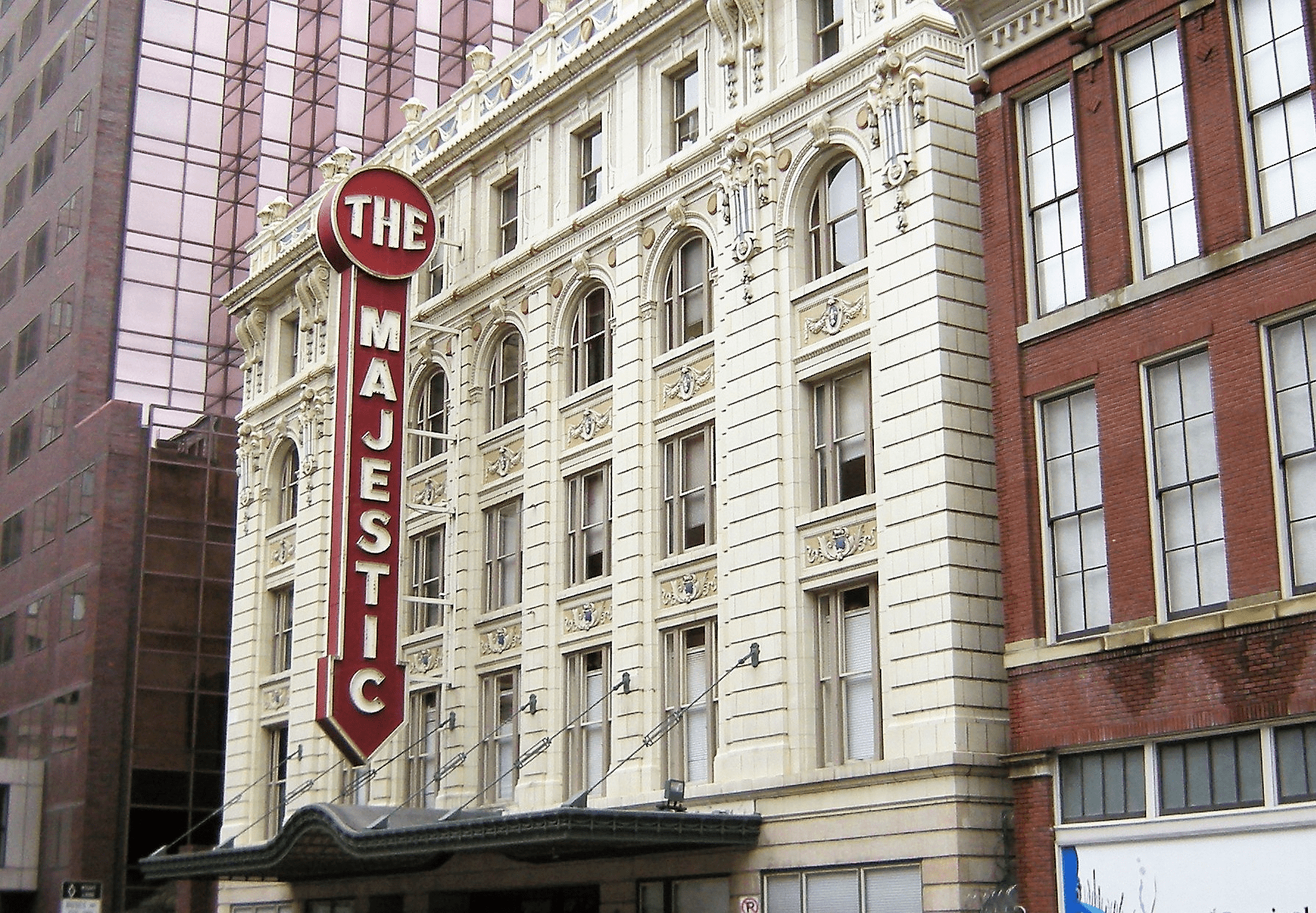
The Entertainment Flagship on Elm Street
The Majestic Theatre became the crown jewel in the extensive network of the Interstate Amusement Company. Its appearance radically changed the face of the city and the direction of its cultural life.
- Southern Broadway. Thanks to the grandeur and popularity of the Majestic, Elm Street turned into a true southern counterpart to Broadway.
- Evolution of Leisure. From the moment it opened, the theater successfully combined vaudeville performances with screenings of the first films.
- Center of Gravity. The venue became the main hub of social life, where all of Dallas’s elite gathered to view the biggest premieres.
The transformation of Elm Street into the region’s theatrical center laid the foundation for Dallas’s modern cultural district. The Majestic did not just showcase art; it dictated the fashion for quality entertainment, becoming the benchmark for the entire American South.
Today, this building remains not only a priceless architectural monument but a living witness to the city’s “golden era”. The Majestic continues to host prominent artists under its historical vaults, reminding new generations of Karl Hoblitzelle’s ambitious dreams and the skill of the architects of the last century.
The Era of Vaudeville and Faded Spotlights
In its first decades of existence, the Majestic stage remembered the steps of true giants of show business, becoming the main arena for the biggest names of the era. Illusionist Harry Houdini, Mae West, and the legendary Bob Hope performed here, turning every performance into an event of national scale.
This was a true golden age when the culture of attending the theater assumed a comprehensive immersion into the world of art, and audiences received much more than just a visual series on the screen.
- Musical Accompaniment. Guests came to enjoy live performances by great orchestras, which created a unique acoustic atmosphere.
- Variety of Genres. The stage combined classical theater, daring vaudeville, and the first steps of cinematography.
- Social Ritual. Going to the theater was a major social event, where the music and live energy of the artists meant no less than the film’s plot.
The atmosphere of the Majestic in those years was filled with the sounds of tuning instruments and loud applause that did not subside until late at night. The theater functioned as a living organism, where every performance by the orchestra emphasized the grandeur of John Eberson’s architecture and Karl Hoblitzelle’s ambitions.
The Sunset of the Great Stage
However, the rapid development of technology and the change in consumer habits in the 1960s dealt a powerful blow to the industry of grand movie palaces.
The changing of eras brought new challenges that gradually pushed classical theaters out of the daily life of citizens. This process was driven by several key reasons.
- Expansion of Television. The appearance of a TV in every home made content viewing much more accessible, leading to a sharp drop in attendance at large venues.
- Changing Urban Landscape. City centers gradually lost their exclusive role as major entertainment hubs, giving way to new suburban cinemas.
- Final Curtain. In 1973, the Majestic was forced to permanently close its doors to the public, and it then seemed this decision would remain unchanged forever.
Technological progress and the reorientation of audiences toward the comfort of their own homes created conditions where maintaining massive architectural objects became economically difficult. Grand buildings that were once erected as symbols of progress suddenly found themselves on the sidelines of the new entertainment industry.
After decades of triumph, the majestic hall plunged into deep silence, leaving dust and memories of former glory to reign among thousands of empty seats. Faded spotlights became a symbol of the end of an era when luxurious palaces of art began to be perceived as outdated artifacts of the past.
This period of oblivion became a test for the theater’s walls, which held the echoes of thousands of voices and orchestral melodies. The Majestic froze in anticipation, turning into a silent monument to times that did not fit into the new, accelerated rhythm of the digital world and mass culture of the late 20th century.
The Mysterious Master of Box Number Four
Legends about the ghosts of the Majestic Theatre are not just tales for tourists, but an integral part of the internal ethics and daily life of the staff. The most famous “resident” of the theater is considered to be Karl Hoblitzelle himself. It is said that the former owner loved his creation so much that he could not fully leave it even after death.
For decades, employees and artists of the Majestic Theatre have encountered phenomena that are difficult to explain logically. These mystical episodes have become part of the folklore of the great stage.
- Stagehands have repeatedly smelled the characteristic scent of expensive tobacco in completely empty corridors.
- In box number four, a strange flickering of light is sometimes observed even when the building is completely de-energized.
- Security guards often report the distinct sound of footsteps on the balcony, though modern motion sensors remain still.
- Actors have noticed the unexplainable movement of small objects in dressing rooms right before going on stage.
Such instances create a special atmosphere of respect for the venue’s past. Instead of fear, the staff feels the presence of an invisible master who continues to oversee order in his majestic palace.
For many, these accounts are proof that the energy of the theater’s creator is forever woven into its walls. The presence of Karl Hoblitzelle is perceived not as a threat, but as a kind of blessing for everyone who steps onto the Majestic stage.
The belief that the former owner remains in the theater helps preserve traditions and the special spirit of the “golden era”. Every unusual rustle or shadow in box number four serves as a reminder of the times when Elm Street was the center of the cultural universe, and the Majestic was its vibrant heart.
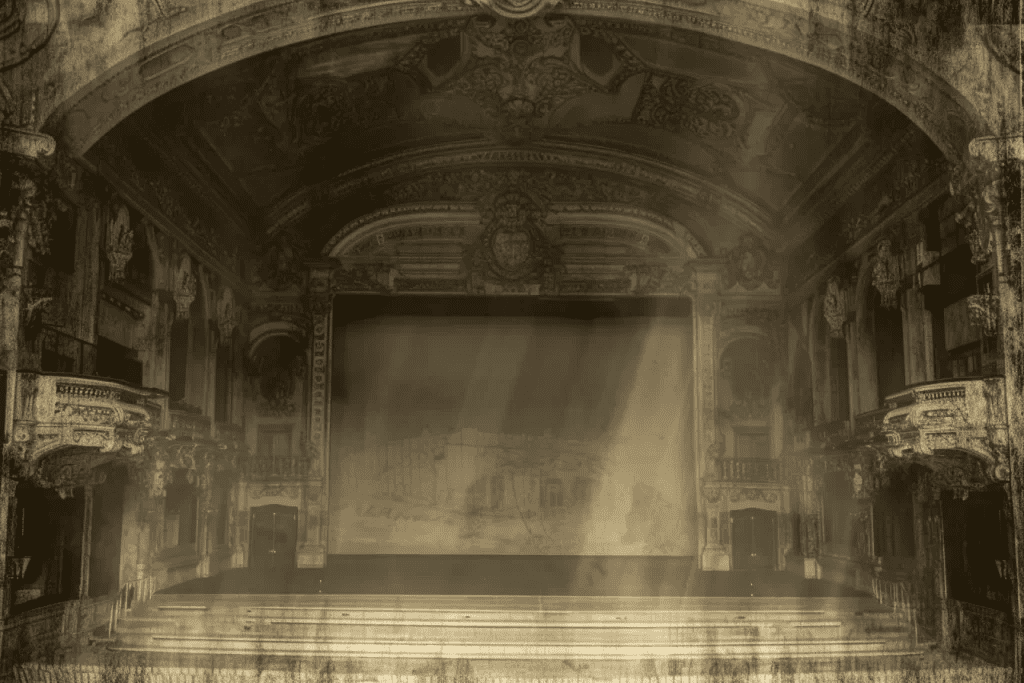
Rebirth from the Ashes and Municipal Care
The salvation of the Majestic was the result of incredible efforts by the Dallas community. In 1976, the Hoblitzelle family transferred the building to the ownership of the city. After a massive reconstruction lasting several years, the theater reopened in 1983. The restoration of the gold molding and original seats returned to the hall the acoustics admired by modern opera singers and rock musicians. Now it is the only surviving structure from “Theatre Row,” reminding us of the former glory of the city center.
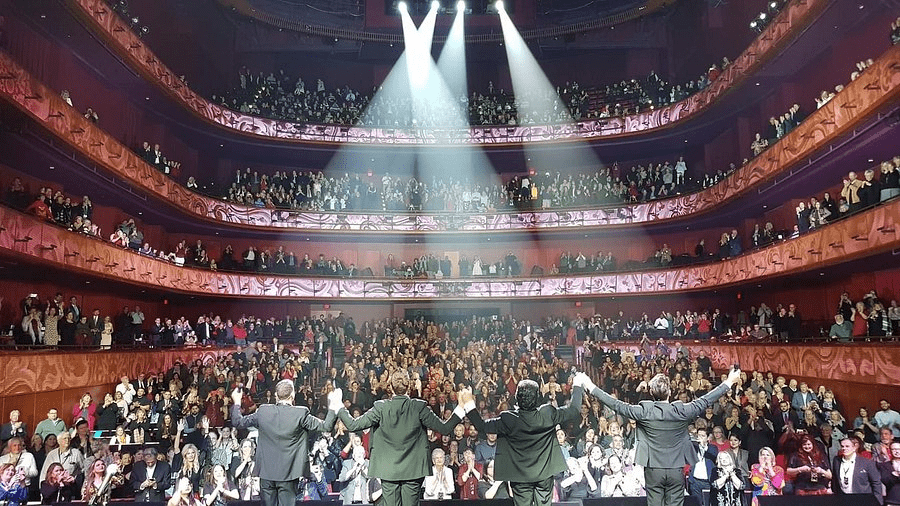
Today, the Majestic Theatre remains the premier stage for large-scale events. From symphonic music concerts to performances by world-class stand-up comedians—the technical parameters of the hall allow for the realization of the most complex requests. The uniqueness of the theater lies in the fact that it has preserved its authentic stage mechanics, combining them with the latest lighting systems. Every performance here turns into a ritual where the viewer feels the connection between the past century and modern media technologies.