

When Stevie Ray Vaughan took the stage, it felt as though the air itself began to vibrate with an electric charge. His guitar didn’t just play—it screamed, it wept, and it preached, returning blues to its primal, almost elemental power. In the 1980s, amidst an era of synthetic pop, this shy kid in a wide-brimmed hat became a true anomaly, proving that sincerity and six steel strings could shatter any wall of commercial snobbery.
The musician’s story is more than just a virtuoso’s biography; it is a chronicle of transforming physical pain and harsh Texas reality into pure sonic energy. From secret late-night rehearsals in a working-class neighborhood of Dallas to a triumphant partnership with David Bowie and the fight for his own life, we reveal on dallaski.com the journey of a man who strung his guitar with cables as thick as rope to make the entire planet feel a real drive once again.
The Guitar Cradle of South Dallas
Stevie Ray Vaughan was born into a family where music was the only escape from a harsh reality. His childhood was spent in the Oak Cliff neighborhood—a place then considered a working-class outskirts of Dallas. While his peers were playing ball, young Vaughan was busy trying to mimic the licks of his older brother, Jimmie. It was here, in an ordinary house on Glenfield Avenue, that the legendary “Texas Flood” was forged. For Stevie, the guitar wasn’t an accessory; it was an extension of his arms, a tool for survival amidst the dust and heat of the southern city.
Musical Tyranny and the First Callouses
The atmosphere in the Vaughan household was electrified not only by the blues but also by a complex relationship with their father, a former Navy officer whose heavy temper often created a tense environment. Music became Stevie’s safe haven. When Jimmie brought home his first guitar, seven-year-old Stevie saw it as a sign of fate. While his older brother forbade him from touching the instrument, the younger one waited for Jimmie to leave the house so he could perfect his technique in secret.
This period of “underground” learning cultivated an incredible auditory memory in the boy. Without knowing how to read music, he copied the sounds he heard from the records of Albert King and Otis Rush playing in their living room. His first guitar of his own, a gift from his father—a simple, cheap three-string toy—became more precious to him than any treasure. He played until his fingers bled, honing every note to perfection.
Oak Cliff: A School of Survival and Blues
Oak Cliff in the ’50s and ’60s was no place for the faint of heart. It was a neighborhood of gas station attendants, construction workers, and endless dusty roads. Yet, it was this landscape that shaped his unique sound—raw, gritty, and incredibly powerful.
- First Performances. Stevie formed his debut band, “The Chantones,” while still in middle school, playing at school parties and in neighbors’ garages.
- Escaping to the Clubs. As a teenager, he began sneaking into Dallas nightclubs, where he watched experienced bluesmen play, soaking up every detail of their performance style.
While most teenagers dreamed of a career in the oil industry or sports, Stevie already knew: his path lay through six strings. Growing up in Oak Cliff taught him the golden Texas rule—if you want to be heard, you have to play louder and more sincerely than everyone else. It was this childhood obsession that eventually transformed the boy from Glenfield Avenue into the premier guitar prophet of Texas.
His First Love Named “Number One”
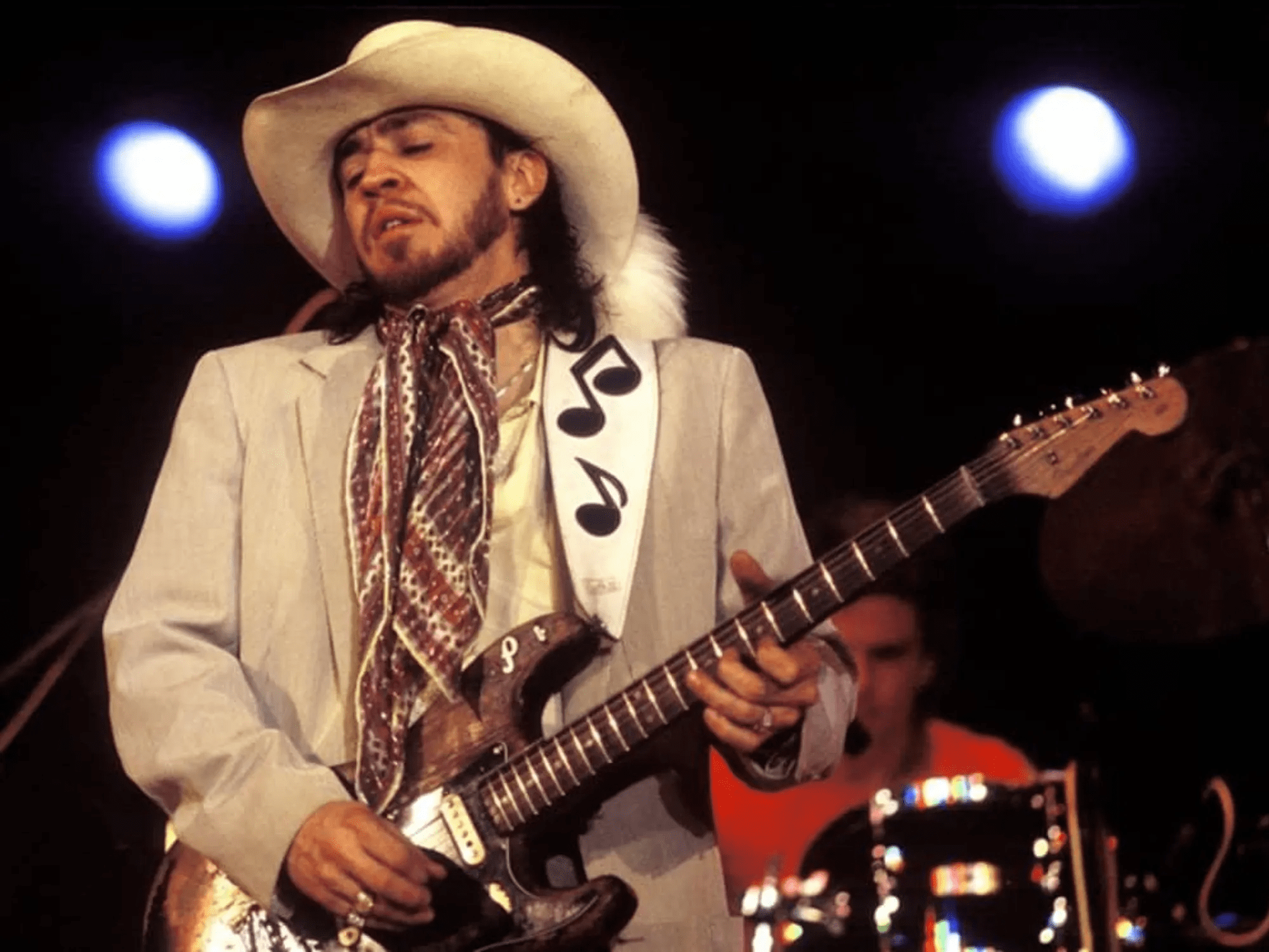
The primary partner in the musician’s life wasn’t a person, but a battle-scarred 1963 Fender Stratocaster, which he affectionately called “Number One” or “First Wife.” It was found in an Austin music shop after Stevie moved there in search of freedom. This instrument featured strings so thick that other guitarists physically could not play it. Vaughan literally carved the sound out of the wood, creating an incredibly dense, “meaty” tone that became the gold standard for modern blues-rock.
A Physical Ordeal of Sound
For Stevie Ray Vaughan, playing “Number One” was a true athletic feat. The guitar was rigged with strings of incredible thickness—he often used a .013 or even .018 gauge, which was several times heavier than standard sets of the time. To withstand such tension without cutting his fingers to the bone, the musician applied superglue to his fingertips, creating an artificial protective layer.
This extreme specification wasn’t a whim; it was a necessity to achieve that signature “Texas Flood.” The massive tension forced the wood to resonate with extraordinary power, creating a sound that was impossible to imitate on light, “fast” instruments. Every note required colossal physical effort from Stevie, making his performance visually intense and emotionally exhausting.
A Living Artifact
Over time, “Number One” became a visual reflection of Vaughan’s very soul. The guitar was covered in countless scratches, and the lacquer on the body was almost completely worn away by his aggressive playing style. Yet, for Stevie, it was a sacred object.
- Hybrid Nature. Although the body was dated 1963, Stevie replaced the neck and installed a left-handed tremolo bridge, similar to his idol Jimi Hendrix, so he could manipulate the sound with his elbow while playing.
- A Symbol of Loyalty. Despite owning dozens of other expensive instruments, “First Wife” was with him at every important concert—from the small bars of Dallas to the massive festival stages of Europe.
This guitar became more than an instrument; it was a witness to his struggle with his own demons and his triumphant return to the top. Even today, “Number One” remains the most recognizable instrument in blues history, a reminder that a true masterpiece is born only where man and machine become one in physical and spiritual ecstasy.
The Blue Flame of Switzerland: Stevie Ray Vaughan’s Turning Point
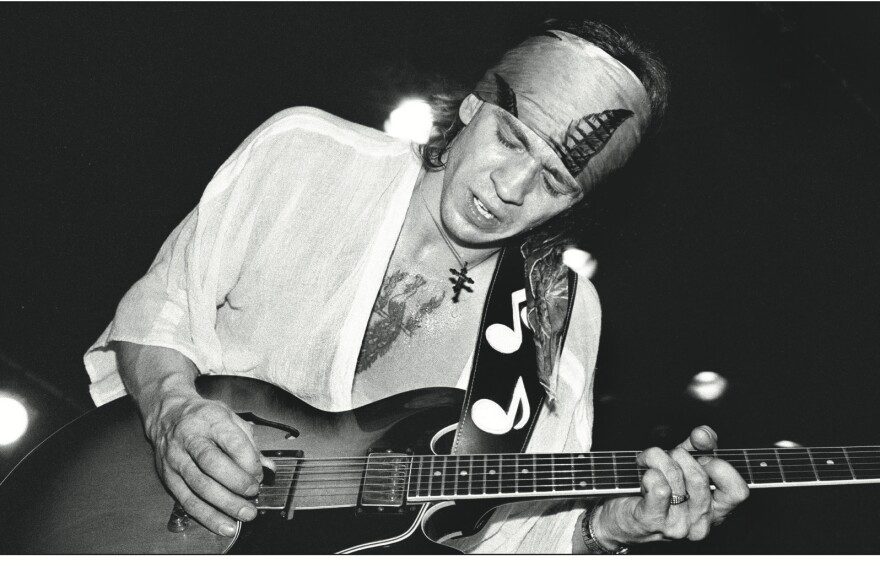
A pivotal moment in the musician’s career was his performance at the prestigious Montreux Jazz Festival in 1982. The audience, raised for decades on intellectual jazz and sophisticated arrangements, was completely unprepared for the appearance of the raw Texas trio, Double Trouble. When Stevie stepped onto the stage in his trademark hat and began striking sparks from “Number One,” the hall was filled with a dissatisfied hum and outright booing. The audience perceived the loud, aggressive blues-rock as a barbarian intrusion into the temple of high art.
The Meeting That Changed History
However, this apparent “failure” became the lucky ticket of Stevie’s life. Sitting in the audience that night was David Bowie, whose instinct for talent was unerring. The legendary Briton was so impressed by Vaughan’s primal energy and technique that he immediately realized: this was the exact sound his new material was missing. After the concert, Bowie invited the Texan to record the guitar parts for his upcoming album, “Let’s Dance.”
- Global Resonance. Participating in the recording of Bowie’s world hit catapulted Stevie from a local hero in Austin and Dallas to the level of an international superstar.
- Triumphant Return. Just three years later, Stevie Ray Vaughan would perform at Montreux again, but this time, the audience met him with a standing ovation, recognizing him as the new King of the Blues.
The Echo of Oak Cliff on the World Stage
Thanks to this chance encounter, the kid from the working-class neighborhood of Oak Cliff became a global phenomenon. His solos on “Let’s Dance” were heard by millions who didn’t even realize they still loved the blues. Stevie didn’t just land a major label contract—he forced an entire generation of the eighties to look back at good old-fashioned blues, proving that sincerity and the “Texas Flood” could break through any wall of snobbery.
The Battle with Internal Demons
Stevie Ray Vaughan’s honesty manifested not only in his notes but also in a rare ability to publicly admit his own weaknesses. At the very peak of his global fame, a destructive addiction to alcohol and drugs became so strong it nearly destroyed his unique talent. This was a period when the “Texas Flood” threatened to stop forever due to the musician’s physical and spiritual exhaustion.
However, in 1986, standing on the edge of life and death, Vaughan found the strength to stop and undergo a full course of rehabilitation. This decision required no less courage than stepping onto a stage before a crowd of thousands.
- A Triumphant Return. His rebirth as a person and an artist was immediate and exceptional.
- The “In Step” Album. This record was not just another release; it was documentary proof of the birth of an entirely new artist—clean, hyper-focused, and even more technically virtuous.
- A New Philosophy of Sound. Stevie proved to the entire music industry by his own example that real drive and emotional depth do not require any artificial stimulants.
After his recovery, Vaughan often spoke about how he could now hear music much more clearly. He became a guide for many others struggling with similar passions, demonstrating that the source of true inspiration lies much deeper than chemical compounds. His playing during this period acquired a special crystalline clarity and a power that came from absolute inner freedom. This was the final stage of his evolution: from the kid from Oak Cliff who sought salvation in a guitar to the mature master who found peace within himself.
The Final Flight over Wisconsin
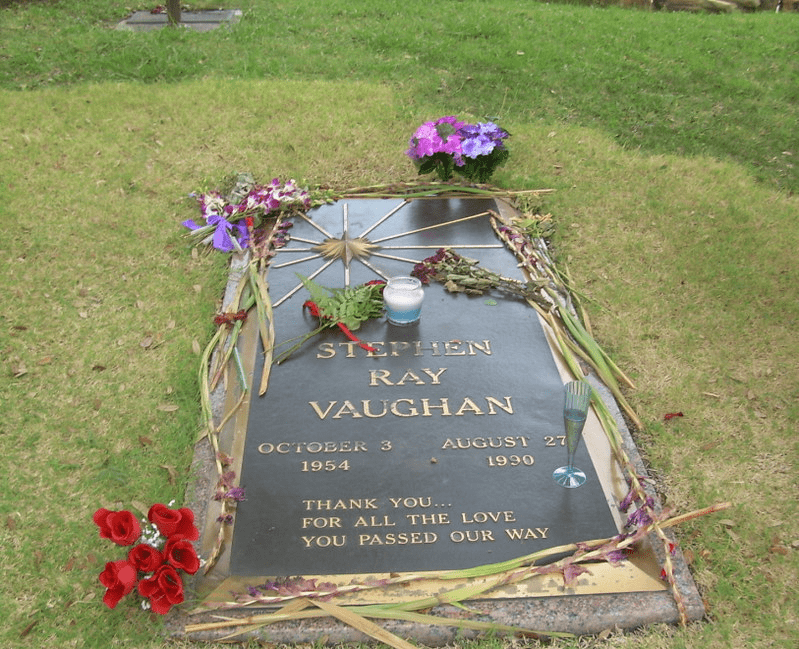
The tragedy of August 27, 1990, silenced the legend’s heart, but not his song. After a concert at Alpine Valley, the helicopter carrying the musician crashed in the fog. Stevie left at his peak, leaving a void that no one has been able to fill. Yet, for every boy in Oak Cliff who picks up an old Stratocaster, Stevie Ray Vaughan remains living proof: sincerity and persistence can turn a working-class suburb into the center of the universe.
A Legacy Carved in Bronze
Today, Dallas and Austin continue a symbolic rivalry for the right to be called Stevie Ray Vaughan’s primary city. His influence on modern Texas culture has become fundamental, turning the musician’s figure into a true national symbol.
- A Place of Pilgrimage. The statue on the shores of Lady Bird Lake in Austin has become a sacred spot for music lovers worldwide who come to pay their respects to the legend.
- A Living Tradition. Annual memorial motorcycle rides in Dallas gather thousands of fans, turning the memory of the artist into real help for young talent through charitable fundraising.
- Academic Recognition. SRV’s guitar riffs have officially entered conservatory curricula as the benchmark example of the perfect fusion of virtuoso technique and extreme emotional tension.
Stevie Ray Vaughan didn’t just bring blues back to the stadiums—he breathed life into the very soul of Texas, making it sound in unison with his Stratocaster. His journey, which began amidst the dust of the Oak Cliff working quarters and ended in eternity, proved: a true genius doesn’t die; he dissolves into every sound flying over the prairies. As long as the heart of the blues beats in Dallas and strings strike sparks in Austin, Stevie’s spirit will remain a constant guiding light—a symbol that music born of pain and purified by light is capable of transcending time and space.
Sources:
- https://www.thisdayinmusic.com/stairway-to-heaven/stevie-ray-vaughan/
- https://www.guitarplayer.com/players/eight-six-string-heroes-pay-tribute-to-the-life-music-and-legacy-of-stevie-ray-vaughan
- https://guitar.com/features/guitar-legends-stevie-ray-vaughan/
- https://www.guitarnoise.com/artists/stevie-ray-vaughan/