

Show business plays a tremendous role in shaping the identity of Dallas as a major metropolis. It’s not just about famous industry figures — it’s also a significant contributor to the city’s economy. Today, we’ll explore one of Dallas’s most remarkable architectural and cultural landmarks — the Morton H. Meyerson Symphony Center — and its impact on the development of show business. Read more about it on dallaski.com.
History of Creation
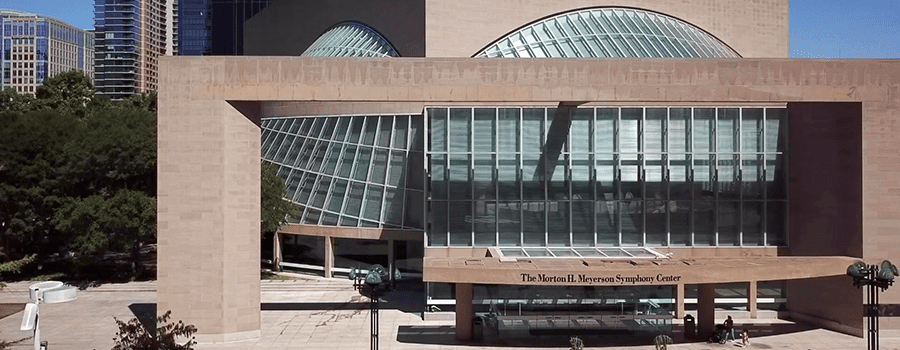
The Morton H. Meyerson Symphony Center opened its doors to the public in 1988. The idea for building a new concert hall arose from the poor acoustics of previous venues used by orchestras.
A key figure behind the construction was Morton H. Meyerson, who led the project — and in whose honor the concert hall was later named. The design was entrusted to the world-renowned architect I. M. Pei, while acoustics were engineered by Russell Johnson of Artec Consultants. The result was a truly exceptional space that seamlessly combines architectural elegance with world-class sound quality.
The Morton H. Meyerson Symphony Center features a 2,062-seat concert hall, including the Eugene McDermott Concert Hall, named after the co-founder of Texas Instruments. The venue boasts an innovative acoustic system with a reverberation chamber and an adjustable sound canopy above the stage.
The construction of the symphony center was financed through a combination of public funds and private donations. Notably, businessman Ross Perot made a major contribution, donating $10 million toward the project.
The Concert Hall’s Role in the Growth of Show Business
Without exaggeration, the Morton H. Meyerson Symphony Center has had a profound impact on show business, culture, and tourism in Dallas. First, it serves as the home of the Dallas Symphony Orchestra. Second, it stands as one of the city’s most prestigious cultural venues, attracting hundreds of thousands of visitors from around the world each year. Third, this world-class hall elevates the city’s overall cultural standard, providing a platform for artistic development, festivals, concerts, and educational programs for all ages.
The symphony center is also a favorite destination among tourists — not only for its performances but also for its architecture. The exterior resembles a large circular pavilion, with striking glass and metal elements that contrast beautifully with the hall’s clean geometric lines.
The most common events held at the center include:
- Classical performances by the Dallas Symphony Orchestra, featuring world-renowned conductors and soloists.
- Popular music festivals that attract fans of various genres — from classical to jazz, blues, and contemporary music.
- Special themed concerts and seasonal shows, including Christmas performances and opera productions.
- Educational programs and workshops that engage both youth and adults, fostering cultural exchange and a deeper appreciation of music.
- Collaborations with other Dallas cultural institutions, allowing for complex art events and tours that combine live performances with cultural tourism.
Naturally, a venue of this caliber also hosts performances by international stars. Over the years, the Morton H. Meyerson Symphony Center has welcomed such renowned artists as Bernadette Peters, Stewart Copeland, Fabio Luisi, and leading conductors of the Dallas Symphony Orchestra.
That concludes our insightful look at one of Dallas’s cultural treasures. We hope you found it interesting and that it deepened your appreciation of your city’s vibrant show business scene.