

Once, the Woodall Rodgers Freeway was a noisy concrete canyon that hopelessly sliced Dallas into two different worlds. Today, right above the roofs of thousands of cars, lies a blooming oasis that has become a global urban phenomenon. Klyde Warren Park is more than just a lawn; it is a complex engineering marvel weighing thousands of tons that proved a city can grow not only upward but “out of thin air,” returning the right to silence and clean air to residents in the very epicenter of traffic.
On dallaski.com, we break down every stage of creating this Dallas oasis:
- Aerospace Secrets: The use of aircraft-grade materials and ultra-light polymers that allowed for a real forest to be planted on the thin “roof” of a high-speed highway;
- The Giant AC: An analysis of the park’s function as a massive natural air conditioner, capable of cooling surrounding skyscraper blocks in the heat of a Texas summer;
- The Economic Boom: How transforming a smog-filled chasm into a public space sent prices skyrocketing and sparked a billion-dollar real estate surge in adjacent neighborhoods;
- Texas’s Most Visited Spot: Why open-air libraries, outdoor yoga, and a lineup of food trucks made this park the most popular location in the state;
- Social Psychology: How the ability to move green bistro chairs and the lack of fences changed the mindset of Dallas residents, erasing the line between the “elite” and the average citizen.
A Green Bridge Over a Concrete Chasm
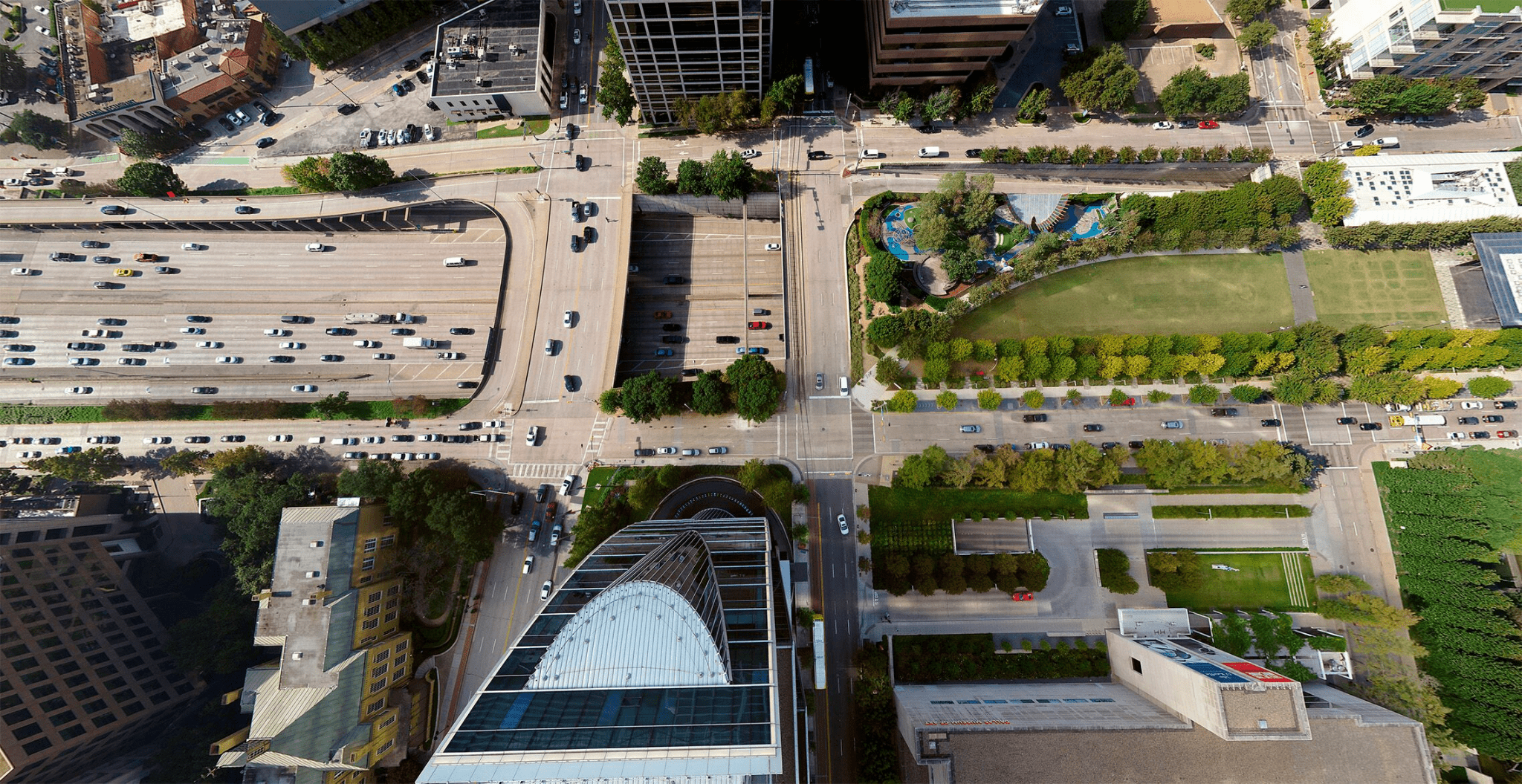
For decades, the Woodall Rodgers Freeway was a deep scar on the body of Dallas, physically and socially separating the Business District from the Arts District and residential Uptown. In 2012, this divide was finally healed by a daring “deck park” engineering project. Built on a massive concrete platform supported by over 300 beams, Klyde Warren Park turned the smoggy space above the road into 5 acres of flourishing garden. This marked the first time in Texas that a recreational zone was created literally “out of thin air,” reclaiming space for the community that previously belonged exclusively to cars.
Engineering Magic: Life Above the Flow of Traffic
Creating the park was a true technological challenge, as it required sustaining plant life directly over intense traffic. Engineers and landscape architects developed a sophisticated multi-layered system:
- Lightweight Soil: To reduce the load on the highway structure, a special mixture of Geofoam and lightweight substrate was used, allowing even large trees to be planted.
- Drainage and Irrigation: An innovative water collection and diversion network ensures optimal moisture for lawns and gardens despite the concrete base.
- Noise and Vibration Barriers: The platform’s design is engineered to absorb the roar of the highway, creating an atmosphere of peace and quiet within the park.
- Vertical Greening: The space around the park is integrated into the urban environment to visually blur the lines between the park zone and the surrounding skyscrapers.
Social and Environmental Impact
Klyde Warren Park became more than just a square; it became Dallas’s “central front porch.” Its appearance radically changed the microclimate and social dynamics of the region. The park serves as a powerful ecological filter, where hundreds of trees absorb carbon dioxide emissions directly at their source—the highway.
Beyond the environmental aspect, the park became a massive economic engine, boosting nearby property values and connecting previously disjointed pedestrian routes. Today, it is a place where free yoga classes, playgrounds, and food courts exist above thousands of vehicles rushing below, proving that even the busiest metropolis can find room for nature amidst the concrete.
Architectural and Ecological Wizardry
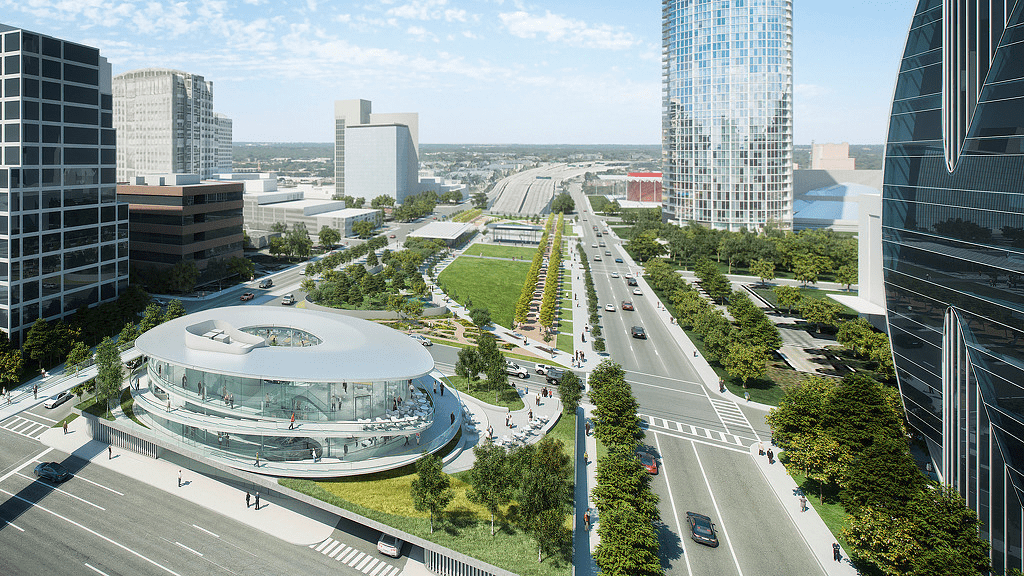
Designed by the Office of James Burnett, the project impresses with its meticulous planning and engineering courage. Because the park is effectively “suspended” over an active freeway, developers faced strict constraints. The soil layer is critically thin, and every pound of the structure’s weight had to be calculated precisely. This required a fundamentally new approach to flora selection and the creation of autonomous life-support systems for the park.
Landscape Design and Engineering Features
To realize this “green wonder,” several innovative solutions were implemented to bypass the physical limitations of the bridge structure:
- Geofoam: To avoid overloading the bridge, blocks of ultralight, high-strength foam were used instead of traditional heavy earth. They constitute the bulk of the park’s “terrain” and are covered with only a thin, nutrient-rich layer of soil.
- Drainage System: The park functions like a giant sponge. It can retain, accumulate, and filter rainwater, significantly minimizing the sudden load on the city’s storm drains during Texas downpours.
- Vertical Greening and the “Canopy”: Over 300 trees, planted using a special root-stabilization technology, create a dense natural canopy. This allows temperatures within the park to drop by 5–10 degrees even on the hottest summer days.
Using these materials allowed for a complex landscape with hills and alleys where, by the laws of traditional construction, there should have been only flat concrete.
Ecological Sustainability in the Heart of the Metropolis
The synthesis of nature and technology allowed for a self-regulating ecosystem in the center of the “asphalt jungle.” The park’s functionality goes far beyond aesthetics:
- Natural Filter: The park has become the “lungs” of Central Dallas, daily absorbing tons of CO₂ and neutralizing fine dust from the cars passing directly beneath it.
- Reducing the “Heat Island” Effect: The large green cover breaks the chain of concrete heating, cooling adjacent office blocks and reducing building air conditioning costs.
- Supporting Biodiversity: Even in such a limited area, the team created a habitat for local bird species and pollinators, which is rare for dense urban developments.
These ecological capabilities turned Klyde Warren Park into a strategic piece of urban infrastructure. The purified air and comfortable microclimate have made it the primary spot for thousands of office workers and tourists to recharge—people who previously tried to bypass this smoggy stretch as quickly as possible.
A Magnet for Capital and People
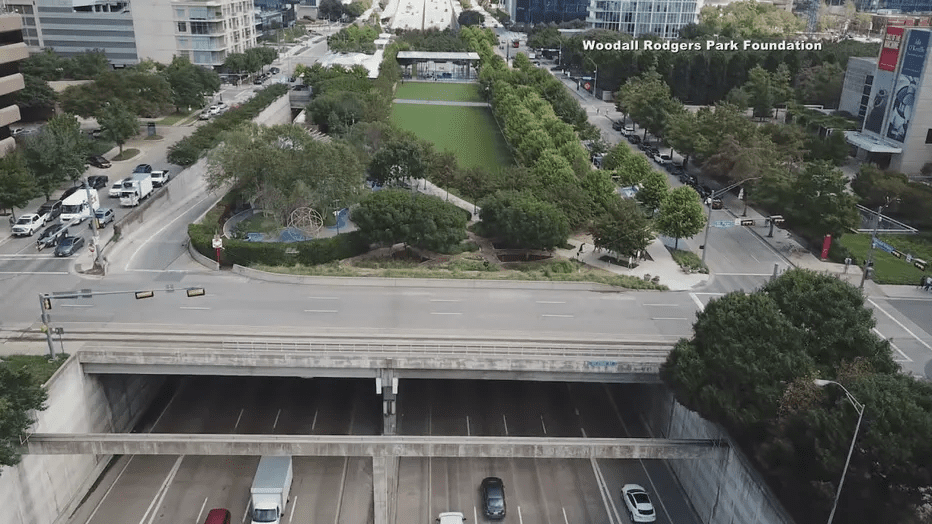
Klyde Warren Park became a powerful catalyst for the Dallas economy, turning a “dead zone” over a freeway into the city’s most expensive land. Since its opening in 2012, surrounding property values have grown exponentially, stimulating the construction of new glass skyscrapers and the development of Arts District cultural sites. However, the park’s true success is measured not just in billion-dollar investments, but in the unprecedented human traffic that breathed life back into the city center.
Why Is the Park Never Empty?
The secret to the location’s popularity lies in the successful mix of activities that satisfy the needs of diverse groups:
- Gastronomic Appeal: The daily line of colorful food trucks has become the park’s hallmark, offering a true culinary kaleidoscope—from classic Texas BBQ to gourmet Vietnamese sandwiches.
- Free Leisure: The space functions as an open cultural center, featuring regular morning yoga, evening outdoor movie screenings, and symphony performances.
- Child Inclusivity: Interactive fountains that offer relief from the heat and innovative play areas have made the park the top weekend destination for families.
- Outdoor Library: A unique recreation area where anyone can borrow a book or fresh newspaper for free to enjoy reading in the shade of the trees.
Due to this diversity, the park stays active throughout the day, transforming from a business lunch spot into an evening relaxation hub.
Democratizing Urban Space
Klyde Warren Park fulfilled a vital social mission, becoming perhaps the only completely democratic space in Dallas. Here, class and social boundaries vanish:
- Social Mixing: This is a place where a top manager from a nearby Downtown skyscraper and a student from a distant suburb can sit in adjacent chairs, using the same high-quality infrastructure.
- A Pedestrian Revolution: The park restored a sense of community and safety for pedestrians—something almost lost in the era of Texas’s total car dependency.
- Openness for All: The lack of fences and free access to all programming make the park a symbol of hospitality and a new philosophy in urban planning.
This “green bridge” over the Woodall Rodgers Freeway didn’t just connect two districts physically—it stitched the fabric of urban society back together. Klyde Warren Park proved that investments in public space return to the city not just through developer taxes but through the emotional health of its residents and the revival of the true spirit of Dallas.
The Psychology of Urban Comfort
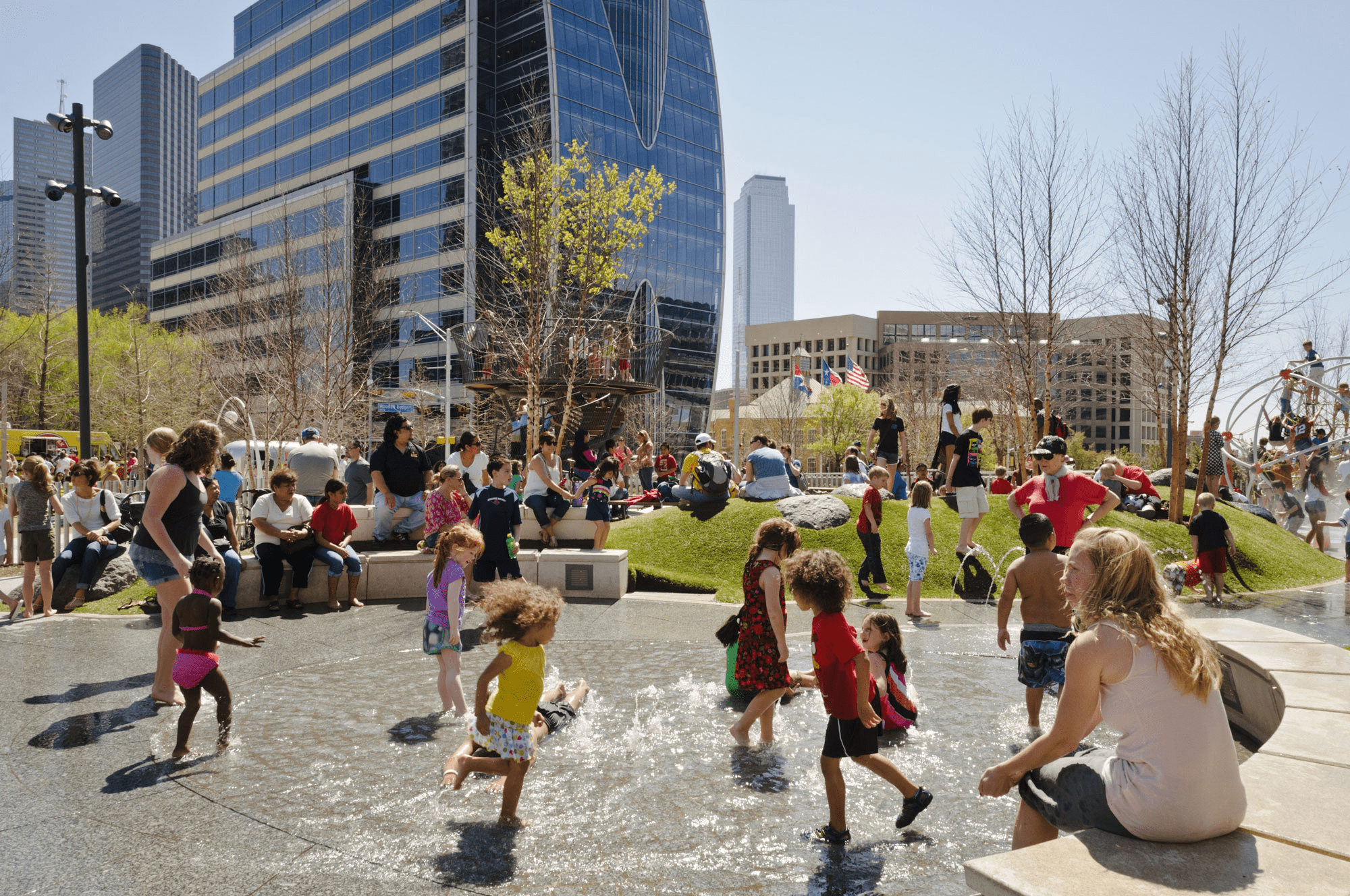
The project’s success lies in its attention to the smallest human needs. There are no “keep off the grass” signs—on the contrary, the lawn is meant for picnics and play. The abundance of foldable green chairs allows people to choose exactly where and with whom they want to sit, creating an illusion of home comfort in the middle of a metropolis.
Klyde Warren Park proved that if you give people a high-quality public space, they will step out of their air-conditioned cars and offices. It is a genuine victory of urbanism over alienation. Today, delegations from around the world come to Dallas to study this experience and attempt to replicate it in their cities.
Sources:
- https://www.dallasartsdistrict.org/community/klyde-warren-park/
- https://dallasinnovates.com/park-effect-how-klyde-warren-park-altered-face-downtown/
- https://www.visitplano.com/attractions/klyde-warren-park/
- https://www.fox4news.com/news/klyde-warren-park-childrens-area-temporarily-closing-for-an-expansion